Find the perfect tennis racket grip size for comfort, control, and power. Prevent injury and boost performance in every match.
Choosing the right tennis racket grip is one of the most important decisions for any player aiming to improve performance and avoid injury. The grip size directly affects how comfortably and efficiently you can swing your racket. A proper tennis handle ensures better control, prevents wrist strain, and enhances shot accuracy. Whether you’re a beginner learning the basics or an advanced player fine-tuning your technique, understanding your racket grip type helps you unlock your full potential. From adjusting to different overgrips for added comfort to selecting between L1, L2, or L3 sizes, every detail matters when it comes to optimizing your feel, power, and precision on the court.
Contents
- 1 Why Your Tennis Grip Size Matters More Than You Think
- 2 How to Measure Grip Size on a Tennis Racquet
- 3 What Are L1, L2, and L3 in a Tennis Racket?
- 4 What Happens if My Grip Is the Wrong Size?
- 5 Which Grip Should You Choose According to Your Playing Style?
- 6 Why Use an Overgrip and How It Changes Your Final Size
- 7 Choosing the Right Grip Size for Your New Tennis Racket
Why Your Tennis Grip Size Matters More Than You Think
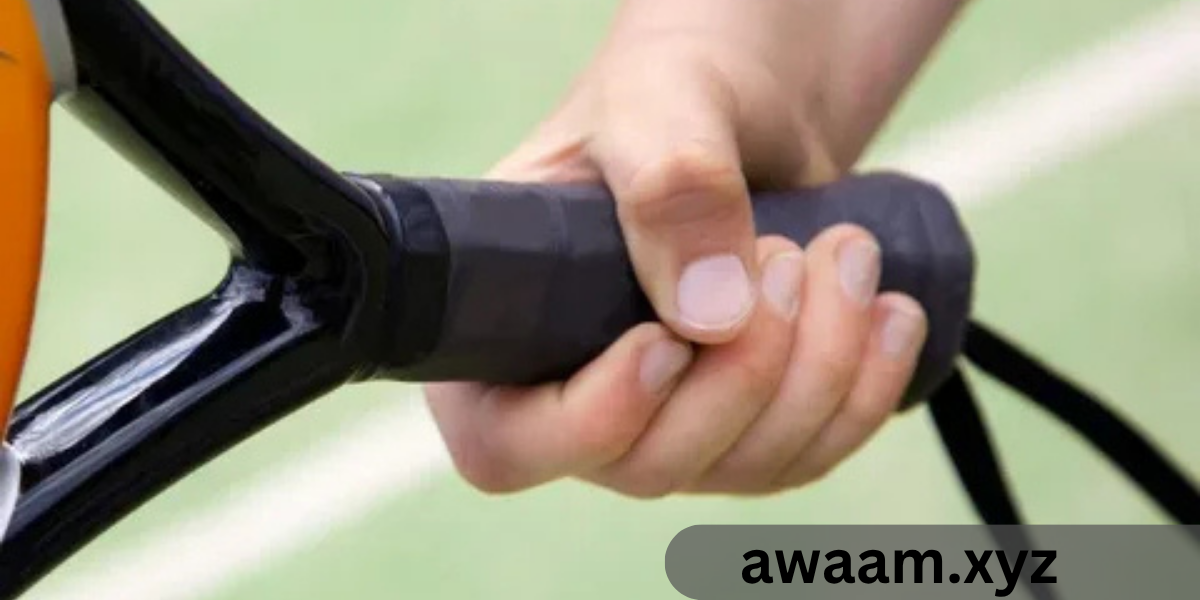
You might believe string tension is your racquet’s vital core but your Tennis Racket Grip Size actually holds the key to your performance. This handle acts as your single most crucial interface to the entire frame. Choosing correctly prevents long-term injury problems and grants you immediate control and effortless power during every shot.
Don’t neglect this critical dimension for the cost is significant and often involves physical pain. The wrong Tennis Racket Grip Size forces your delicate wrist extensors to fire inefficiently. This chronic biomechanical strain can absolutely cause debilitating issues like wrist pain tennis grip problems. Therefore you must master how to measure tennis grip size to unlock your true potential today.
How to Measure Grip Size on a Tennis Racquet

Finding your ideal tennis racket grip size is simpler than you expect. You must employ the industry standard proper grip for tennis racket evaluation right now. The easiest route is the Ruler Test which provides a surprisingly accurate assessment for initial sizing. Just measure the length from the lateral crease of your dominant palm up to the tip of your ring finger.
Alternatively, you should use the reliable Index Finger Test for crucial verification. Hold the tennis racquet handle with a continental grip leaving a comfortable space. You must fit your non-hitting hand’s index finger snugly in that gap for the correct tennis grip for beginners. This confirms you have the ideal tennis racket grip size for optimum handling.
What Are L1, L2, and L3 in a Tennis Racket?
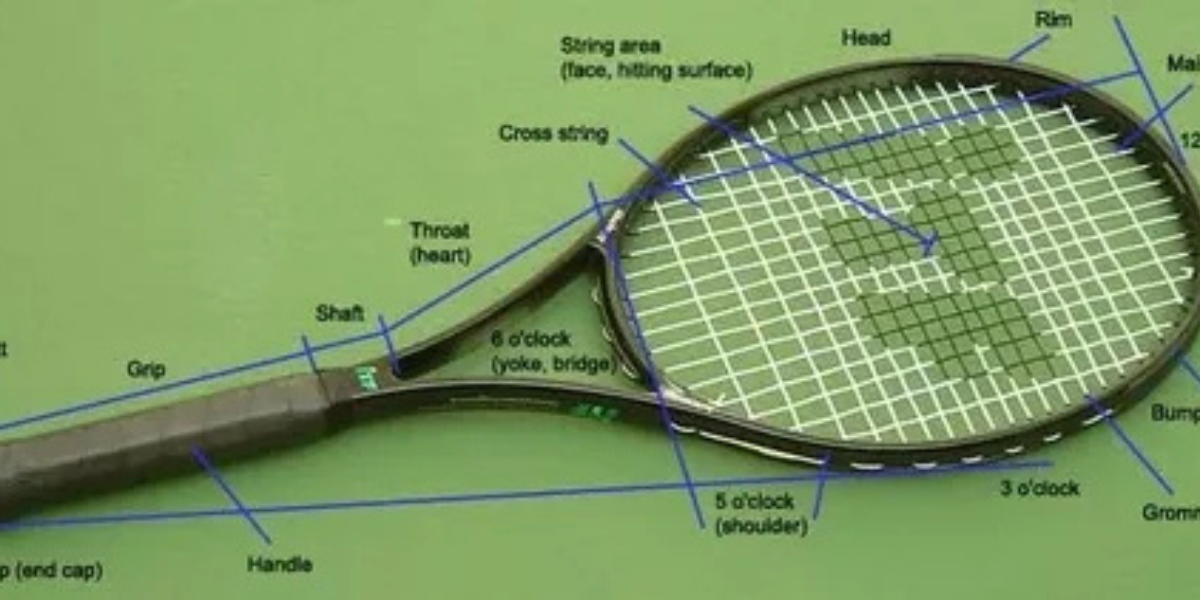
The worldwide sizing system for Tennis Racket Grip Size uses two parallel methodologies you need to understand immediately. In the United States we measure the circumference in tennis grip measurement inches, typically starting from $4$ inches. However European manufacturing simplifies this with convenient ‘L’ codes, which you often see stamped on the butt cap.
The key is correlating these tennis racquet handle sizes L1 to L5 correctly. This translation is fundamental for every player’s buying decision. For example, the L3 code absolutely matches $4 \frac{3}{8}$ inches which remains the ideal tennis racket grip size for most adult males. Knowing these Difference between overgrip and replacement grip factors and codes prevents frustrating purchasing mistakes online.
| Standard | Size in Inches (USA) | European Code |
| Small | $4 \frac{1}{8}$ inches | L1 |
| Average | $4 \frac{1}{4}$ inches | L2 |
| Most Common | $4 \frac{3}{8}$ inches | L3 |
| Large | $4 \frac{1}{2}$ inches | L4 |
What Happens if My Grip Is the Wrong Size?
Ignoring the simple rules of How to choose the right tennis grip size (L1–L5) carries a hidden cost far greater than lost points. An incorrect size severely limits performance and dangerously accelerates wear and tear on your tendons. Players often overlook this critical dimension until sudden, searing pain strikes.
This handle must feel like a true extension of your own forearm not a foreign object. The resulting injury often forces you off the court for weeks or months. Therefore you must know What happens if your tennis grip is too small or too big? You must prioritize your tennis racket comfort and injury prevention above everything else.
If it’s too big?
A handle that feels too thick hinders crucial wrist snap and forearm rotation. You severely limit the racquet head speed required to generate power and heavy topspin during rallies. This sizing error often causes premature fatigue in your forearm muscles contributing significantly to strains and injuries. Furthermore your ability to quickly switch between continental and semi-western grips diminishes sharply.
If it’s too small?
Conversely holding a handle that’s too thin forces you to grip the racquet with destructive, excessive force. You squeeze the handle too tightly because you fear it slipping from your grasp during a forceful stroke. This constant muscular tension minimizes your wrist’s natural flexibility reducing spin potential and power. Worse yet this scenario is a primary contributor to chronic tennis elbow from wrong grip size problems.
Which Grip Should You Choose According to Your Playing Style?
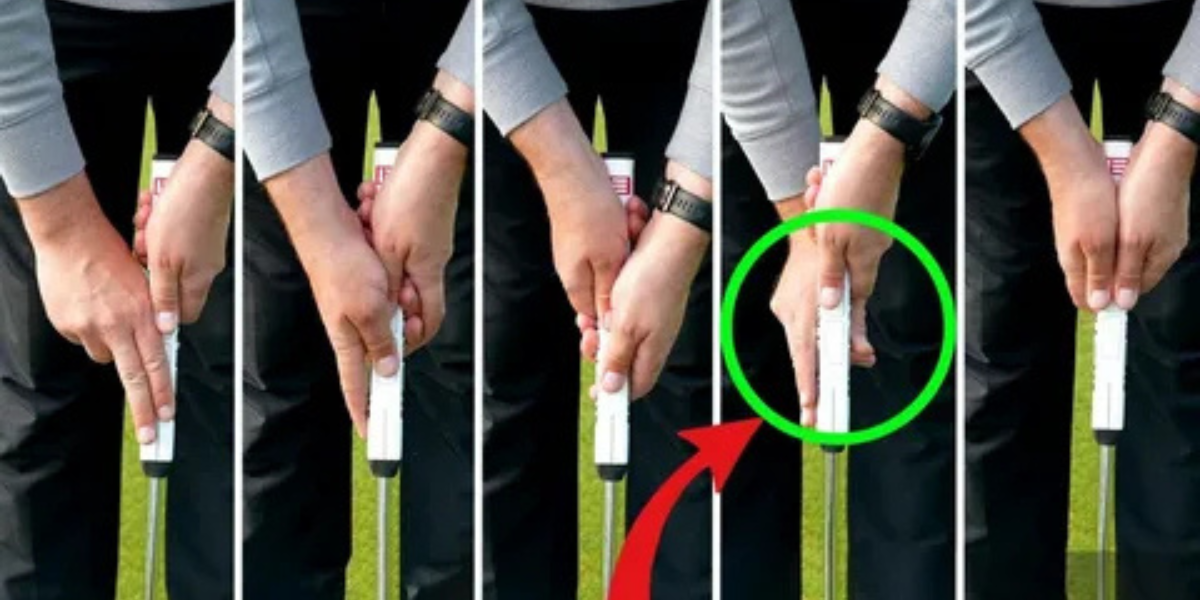
You shouldn’t select your Tennis Racket Grip Size in a vacuum; your individual tennis playing style and grip size should influence your final decision. Players who favor heavy topspin and a fluid wrist action often prefer a size slightly smaller than measured. This subtle reduction grants them quicker wrist movement and maximum racquet head acceleration upon contact.
However if you are a power hitter who favors flatter groundstrokes and relies on stability a slightly thicker grip size is better. This choice provides a more solid point of contact reducing undesirable frame twisting. Ultimately this subtle fine-tuning is only recommended once you master the correct tennis grip for beginners.
Why Use an Overgrip and How It Changes Your Final Size
Understanding the Difference between overgrip and replacement grip is vital for fine-tuning your equipment. Primarily an overgrip serves as a sacrificial layer that protects the expensive base grip from sweat and degradation. It drastically enhances moisture absorption maintaining your crucial control during humid conditions.
More importantly, the overgrip provides you a simple temporary solution for minor size correction. Applying a standard overgrip adds approximately $1/16$ of an inch to the base tennis handle size for men and women. This subtle $1/16$ increase allows players to fine-tune their Tennis Racket Grip Size without permanently modifying the costly handle.
Choosing the Right Grip Size for Your New Tennis Racket
Navigating the multitude of choices when purchasing a new racquet demands precision and careful verification. When buying online always refer to the retailer’s dedicated tennis grip size chart to cross-reference the tennis grip measurement inches with the European L-codes. Never assume an L3 size means the same across all brands.
If you shop in a physical store however you must hold the racquet with the required grip and perform the Index Finger Test right there. Make certain your test confirms the space is just snug not painfully pinched or dangerously loose. Always buy the best tennis grip size for control or slightly smaller because shrinking a handle is a much more difficult modification than simply building it up.
Conclusion
The handle is truly your sole physical connection to the entire racquet frame and its tremendous power. Choosing the ideal Tennis Racket Grip Size is the most fundamental decision you make for your long-term athletic health. Prioritizing the correct tennis grip for beginners drastically reduces your injury risk and boosts your control simultaneously.
You deserve a setup that feels like a natural extension of your arm not a clumsy club. The path to finding the ideal tennis racket grip size is not complex but requires simple, mindful steps. Go use the tennis grip size guide 2025 methods now to secure your perfect fit and unlock your full potential.
FAQ,s
Should I get a 2 or 3 grip size tennis?
Most men prefer L3 (4 3/8″), while women usually choose L2 (4 1/4″) — pick what feels more comfortable in your hand.
What does L1, L2, L3, and L4 mean on a tennis racket?
These are grip size codes, with L1 being smallest and L5 largest — measured in 1/8-inch increments.
What is 4 1/4 grip size?
A 4 1/4 grip equals L2 size, common among women and players with smaller hands.
What is the most popular tennis grip size?
The most popular size is L3 (4 3/8″), suitable for most adult male players.
What are the 4 types of grips in tennis?
The main grips are Continental, Eastern, Semi-Western, and Western.
What grip do most tennis pros use?
Most pros use the Semi-Western grip for forehands — it balances power and spin.
Why are tennis players using smaller grips?
Smaller grips offer better wrist movement and more spin control, especially on topspin shots.
What is Djokovic’s grip?
Novak Djokovic uses a Semi-Western forehand grip and a two-handed backhand.
What grip size do most pros use?
Most male pros use L3 or L4, while female pros often use L2.
What is Alcaraz grip size?
Carlos Alcaraz reportedly uses an L3 grip size, ideal for his aggressive style.
What happens if tennis grip is too big?
A grip that’s too big causes less control, wrist strain, and can lead to tennis elbow.